
Botox vs. Dermal Fillers: What's the Difference and Which Is Right for You?
Botox and dermal fillers are two of the most popular non-surgical treatments at med spas across the Lehigh Valley — and two of the most commonly confused. Both a injectables. Both smooth signs of aging. But they work in fundamentally different ways, and choosing the wrong one for your goals is one of the most common (and most expensive) mistakes in aesthetic treatments.
Many people use the terms interchangeably, but they are far from the same. One relaxes muscles to smooth expression lines. The other adds volume to replace what has been lost. Knowing which treatment targets which concern is the first step toward achieving the results you actually want — whether you are in Allentown, Bethlehem, Easton, or anywhere else in the Valley.

Understanding Botox: Relaxing Dynamic Wrinkles
Botox, a brand name for botulinum toxin type A, is a neurotoxin temporarily paralyzes muscles. It is primarily used to treat dynamic wrinkles — lines that form as a result of repetitive facial movements like smiling, frowning, or squinting. When injected into specific muscles, Botox blocks the nerve signals that tell those muscles to contract. The muscle relaxes, and the overlying skin smooths out.
The effects of Botox typically become visible within 3 to 7 days after treatment, with full results appearing around two weeks. Those results last 3 to 6 months, after which muscle activity gradually returns and wrinkles reappear. Regular maintenance treatmes are necessary to sustain the smooth appearance.
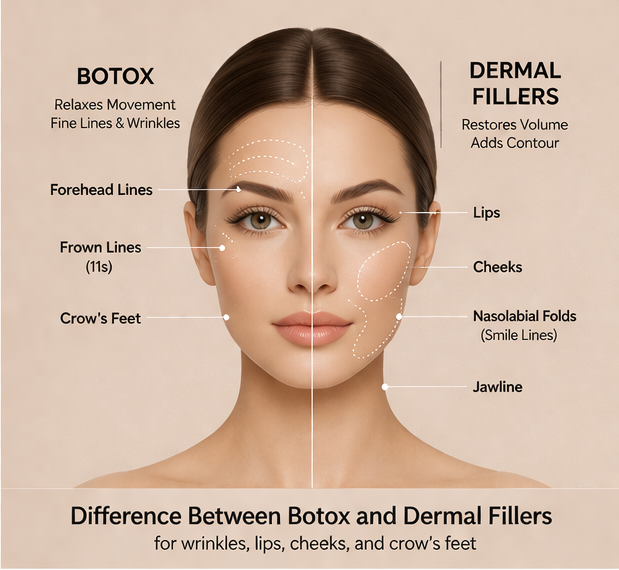
Common areas treated with Botox include frown lines (glabellar lines between the eyebrows), crow's feet (lines around the eyes), and forehead lines. Botox is also used for medical conditions such as chronic migraines, excessive sweating, and muscle spasms.
How Botox Works: A Closer Look
At a cellular level, Botox works by inhibiting the release of acetylcholine, a neurotransmitter responsible for muscle contraction. When acetylcholine is blocked, the targeted muscles cannot receive the signal to contract. The effect is highly localized — only the injected muscles are affected when treatment is administered by a skilled professional.
The procedure itself is quick, often taking only 10 to 20 minutes depending on the number of areas being treated. It involves several small injections using a fine needle. Most patients report minimal discomfort, often describing it as a brief pinch. There is typically no downtime — you can resume normal activities immediately.
Common side ets include temporary bruising, swelling, or redness at the injection site. Rare but more significant side effects like temporary eyelid drooping can occur if injected incorrectly, which is why choosing an experienced injector is essential.
Dermal Fillers: Restoring Volume and Contouring
Unlike Botox, dermal fillers are designed to add volume, fill in static wrinkles, and enhance facial contours. Static wrinkles are lines that are visible even when your face is at rest, often caused by a loss of collagen, elastin, and hyaluronic acid, along with gravity and sun exposure. Fillers are gel-like substances — most commonly made from hyaluronic acid, a naturally occurring substance in the body that helps skin retain moisture and volume.
When injected beneath the skin, fillers plump the treated area, smoothing wrinkles, restoring lost volume, and improving facial symmetry. They can also enhance features like lips and cheeks. Results are usually visible immediately and can last anywhere from 6 months to 2 years or longer, depending on the type of filler, the area treated, and individual metabolism.
Common areas treated with dermal fillers include nasolabial folds (from the nose to the corners of the mouth), marionette lines (from the corners of the mouth down to the chin), cheeks, lips, and under-eye hollows. They can also improve the appearance of scars and sculpt the jawline or chin.
Types of Dermal Fillers and Their Applications
The market offers a variety of dermal fillers, each with unique properties and ideal applications. Hyaluronic acid fillers, such as Juvéderm and Restylane, are the most popular due to their natural-looking results and reversibility — they can be dissolved with hyaluronidase if needed. HA fillers are excellent for adding volume to lips, chs, and under-eye areas, as well as filling moderate to severe wrinkles.
Other options include calcium hydroxylapatite fillers like Radiesse, which are thicker and often used for deeper lines and volume restoration in the cheeks and hands. Poly-L-lactic acid fillers like Sculptra stimulate the body's natural collagen production over time and are used for gradual, long-lasting volume restoration. Polymethylmethacrylate fillers like Bellafill are semi-permanent and typically reserved for deeper wrinkles and folds.
Key Differences: Botox vs. Dermal Fillers
The fundamental distinction between Botox and dermal fillers lies in their mechanism of action and the wrinkles they target. Botox addresses dynamic wrinkles by relaxing muscle movement; fillers address static wrinkles and volume loss by adding substance beneath the skin. Think of it this way: Botox smooths a crumpled piece of paper by releasing the tension. Fillers fill in a dent with putty.
| Feature | Botox | Dermal Fillers |
|---|---|---|
| Primary Action | Relaxes muscles to reduce dynamic wrinkles | Adds volume, fills static wrinkles, enhances contours |
| Main Ingredient | Botulinum toxin type A | Hyaluronic acid, calcium hydroxylapatite, poly-L-lactic acid |
| Target Wrinkles | Dynamic — frown lines, crow's feet, forehead | Static — nasolabial folmarionette lines; volume loss |
| Onset of Results | 3 to 7 days (full effect in 2 weeks) | Immediate |
| Duration of Results | 3 to 6 months | 6 months to 2+ years |
| Reversibility | Not directly reversible | HA fillers can be dissolved with hyaluronidase |
Understanding these distinctions makes it easier to see why many patients end up using both treatments in combination — they complement each other by addressing different aspects of facial aging.
Which Treatment Is Right for You?
Deciding between Botox and dermal fillers — or a combination of both — s on your specific concerns, aesthetic goals, and the advice of a qualified professional. During a consultation, a med spa expert will assess your facial anatomy, skin condition, and desired outcomes to recommend the right plan.
If your primary concern is the appearance of lines that become more prominent when you make an expression — forehead, between the brows, around the eyes — Botox is likely the answer. It smooths those lieffectively without changing your features.
If you want to restore lost volume in your cheeks or temples, plump thin lips, or smooth deeper lines that are visible even at rest, dermal fillers are the better choice. They lift, plump, and redefine facial contours in ways Botox simply cannot.
Considerations Before Treatment

Before any injectable treatment, a few things are worth confirming. First and foremost, choose a reputable med spa with licensed and experienced injectors. Verify credentials, read reviews from actual Lehigh Valley patients, and confirm the injector has a strong safety record. A qualified professional will run a thorough consultation, explain the procedure, and discuss all risks and benefits before any needle comes out.
Be realistic about expectations. Botox and fillers deliver impressive results, but they are not magic wands. Discuss openly what can and cannot be achieved. A good injector will guide you toward results that enhance your natural features rather than overwhelm the
Finally, factor in cost and maintenance. In the Lehigh Valley, expect Botox to run $11 to $15 per unit — a typical treatment covering forehead, frown lines, and crow's feet uses 40 to 60 units, putting a session in the $500 to $900 range that lasts 3 to 4 months. Dermal fillers run $550 to $950 per syringe, and most patients need one to two syringes per area. Never chase the lowest price — deeply discounted injectables often mean diluted product, an inexperienced injector, or a bait-and-switch on unit count.
Combining Treatments for Comprehensive Rejuvenation
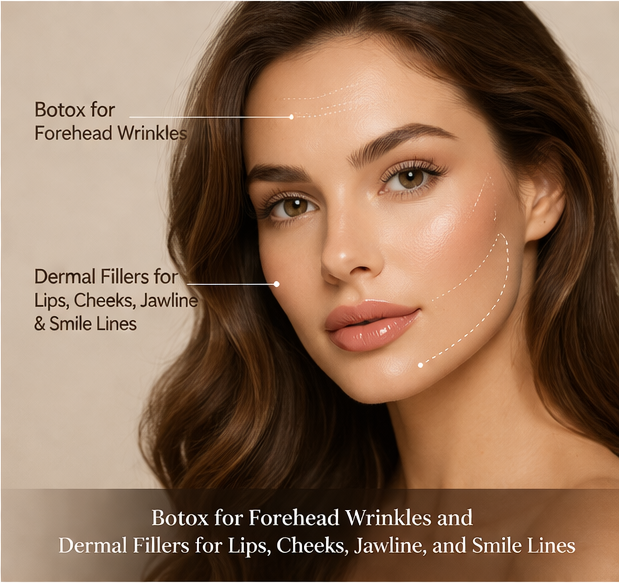
For many patients, the most effective approach involves both Botox and fillers together. This combination allows a more complete treatment of the signs of aging — Botox addresses dynamic wrinkles in the upper face while fillers restore volume and smooth static wrinkles in the mid and lower face.
typical combined plan might use Botox on forehead lines and crow's feet, plus hyaluronic acid fillers to plump the cheeks, define the jawline, and enhance the lips. This layered approach usually yields a more balanced, harmonious, natural-looking result than either treatment alone. A skilled injector can design a personalized plan that integrates both.Choosing Your Injector in the Lehigh Valley
The single most important decision in either treatment isn't Botox vs. filler — it's who's holding the needle. A few questions worth asking befyou book:
Are you a licensed medical professional? The answer should be MD, DO, PA, NP, or RN under medical supervision — nothing less.
How many years have you been injecting, and how many treatments per week? Volume and experience matter enormously with fillers in particular.
Can I see before-and-after photos of your own work? Their actual patients, not stock images.
What product are you using, and what is the price per unit or per syringe? A confident injector answers clearly. A vague one is a warning.
What happens if I am not happy with the result? Their policy tells you how much they stand behind their work.
Ready to Find the Right Injector?
Botox relaxes muscles that create expression lines. Fillers replace volume and reshape features. They solve different problems — and the right choice depends on what yoe trying to change. Browse Juvenate's directory of Lehigh Valley med spas, compare providers, read verified reviews, and find an injector whose work matches your goals.
Browse All Lehigh Valley Med Spas →